iPhone · iOS 26
Tysha
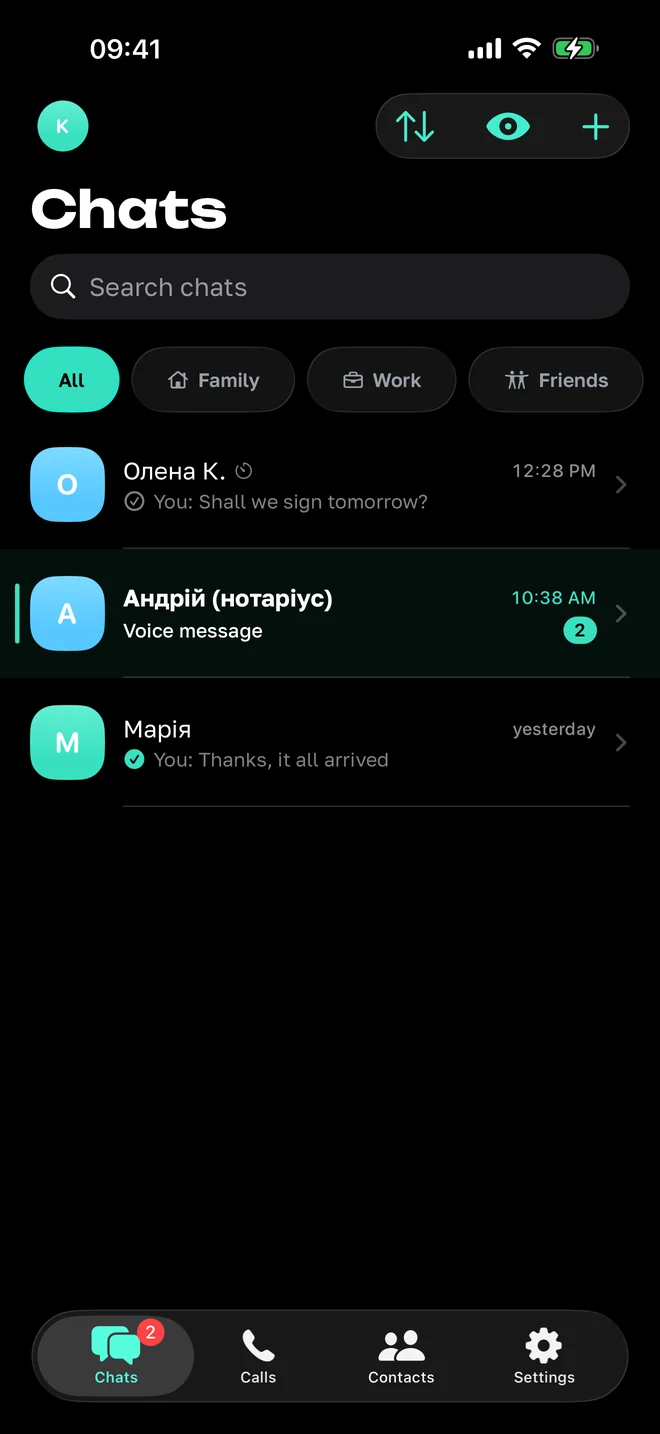
No phone number, no address book, no people search. Your identifier is tied to nothing: showing it does not reveal who you are. Messages are encrypted on your phone and decrypted on theirs - the server gets a blob of bytes and a queue address.
Encryption is libsignal - the same engine Signal uses, with post-quantum key agreement. We did not write it and did not rewrite it.

How it works
The server is there to deliver, not to read
A message is encrypted on your phone and decrypted on theirs. What the server gets is an envelope: a blob of bytes and a queue address. The sender's name lives inside the ciphertext, so the server never learns it. Delivered envelopes are erased; undelivered ones live no longer than thirty days.
Safety numbers are compared in person - by scanning a QR code or reading the digits aloud. Only the person who did the comparing gets the «verified» mark: showing your own code and taking someone's word for it is not verification.
Who you are here
An identifier that tells nobody who you are
No phone number - nobody asks for one. No address book - the app never reads it. No people search: you cannot be found, by a name or by anything else.
Instead there is a username you made up yourself, tied to nothing. Showing it reveals nothing about you: not a number, not an email, not where else you exist. Want a different one? Make a different one.
Even on the server it does not live the way you would think: envelopes are addressed not to a name but to a queue address - sixty-four opaque characters the name cannot be recovered from.

Invitations
A single-use link that dies in fifteen minutes
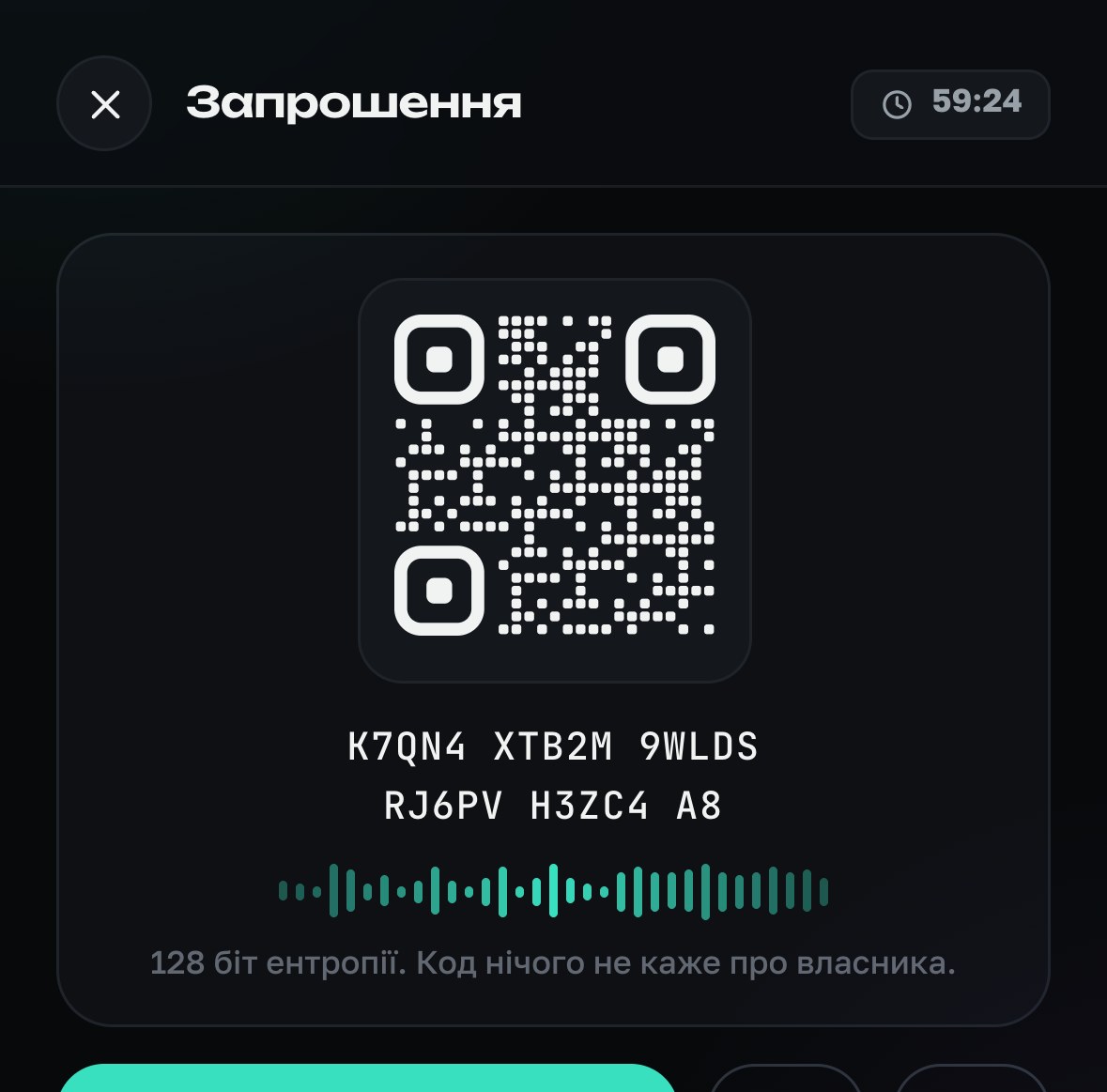
To start a conversation you show someone the QR code on your phone or send them a link - by any means, even read aloud. It is an invitation, not an address: it works once and lives fifteen minutes. Used, it dies that same second, and nobody gets a second turn with it.
A link can be intercepted - which is exactly why it decides nothing on its own. Whoever used it appears on your side as a separate request: you see the name and say yes or no. And to be sure it is the same person, there is the safety code - compare it in person or over video.
Calls · already working
Calls go phone to phone, not through the server
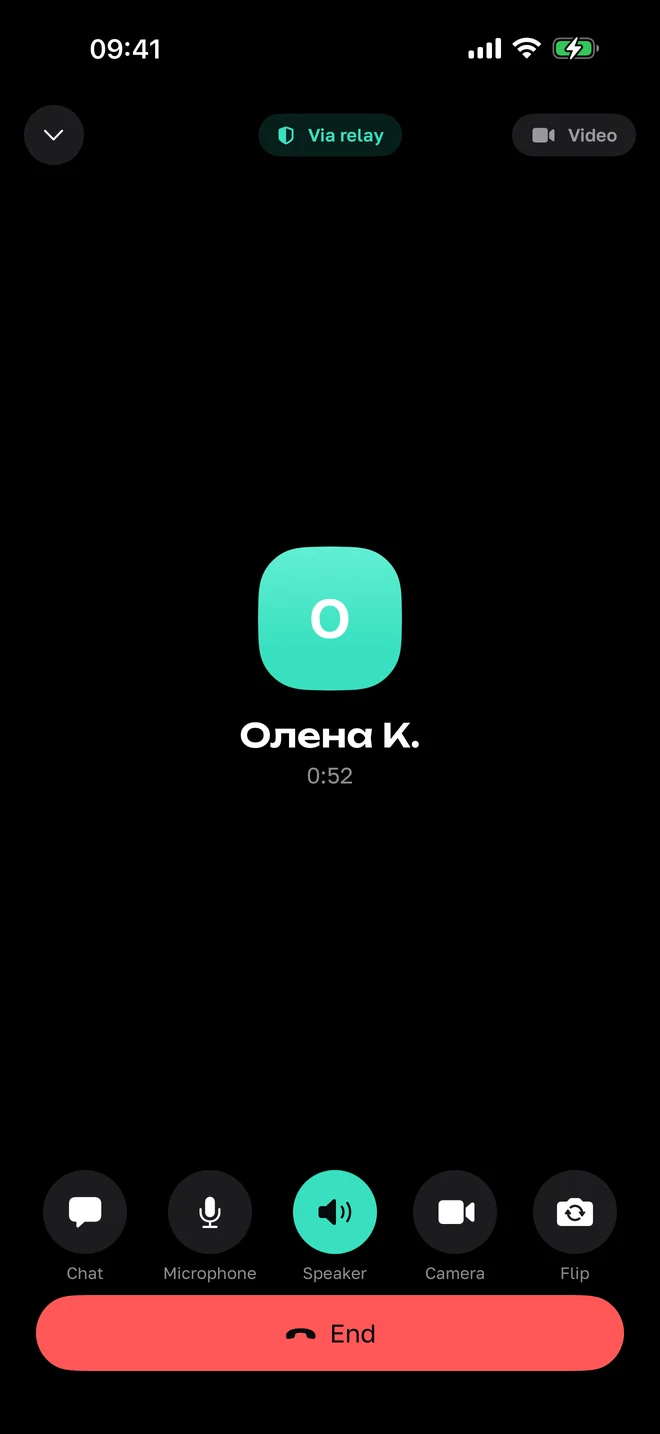
Voice calls already work and go through - in testing for now, along with the rest of the app. Audio goes from one phone straight to the other - the server takes no part in the conversation at all. Only a handful of setup envelopes pass through it at the very start, so the two phones can find each other.
When a direct path cannot be built - behind a corporate network, or with some mobile carriers - our own relay steps in. It forwards packets and sees nothing: the media is encrypted and it holds no keys.
The call screen says plainly which path the audio took: «direct» means the other side can see your IP address, and you should know that rather than guess.

Conversations
Disappearing messages that actually disappear
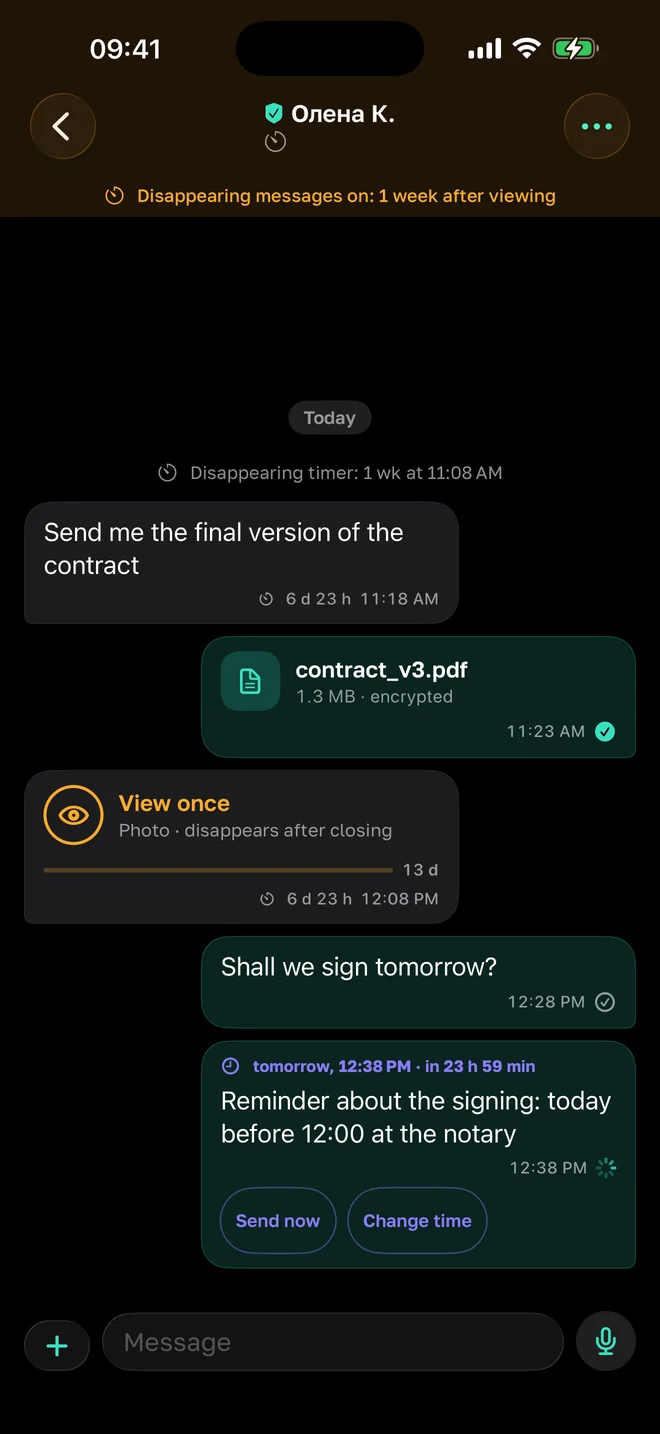
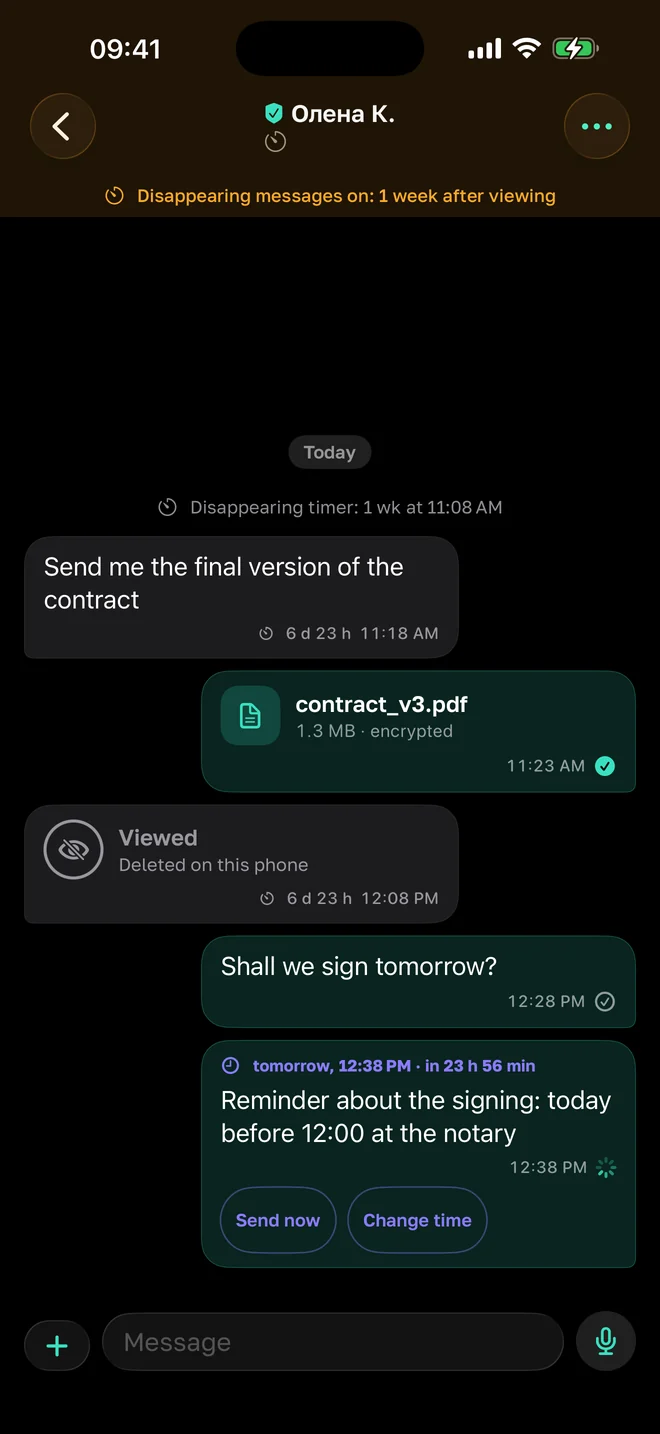
A timer from thirty seconds to four weeks, and it is the same for both sides: it is a rule of the conversation, not a note in your own diary. On the receiving side the countdown starts when the message is read, not when it arrives - something that came in at night should not vanish before anyone has seen it.
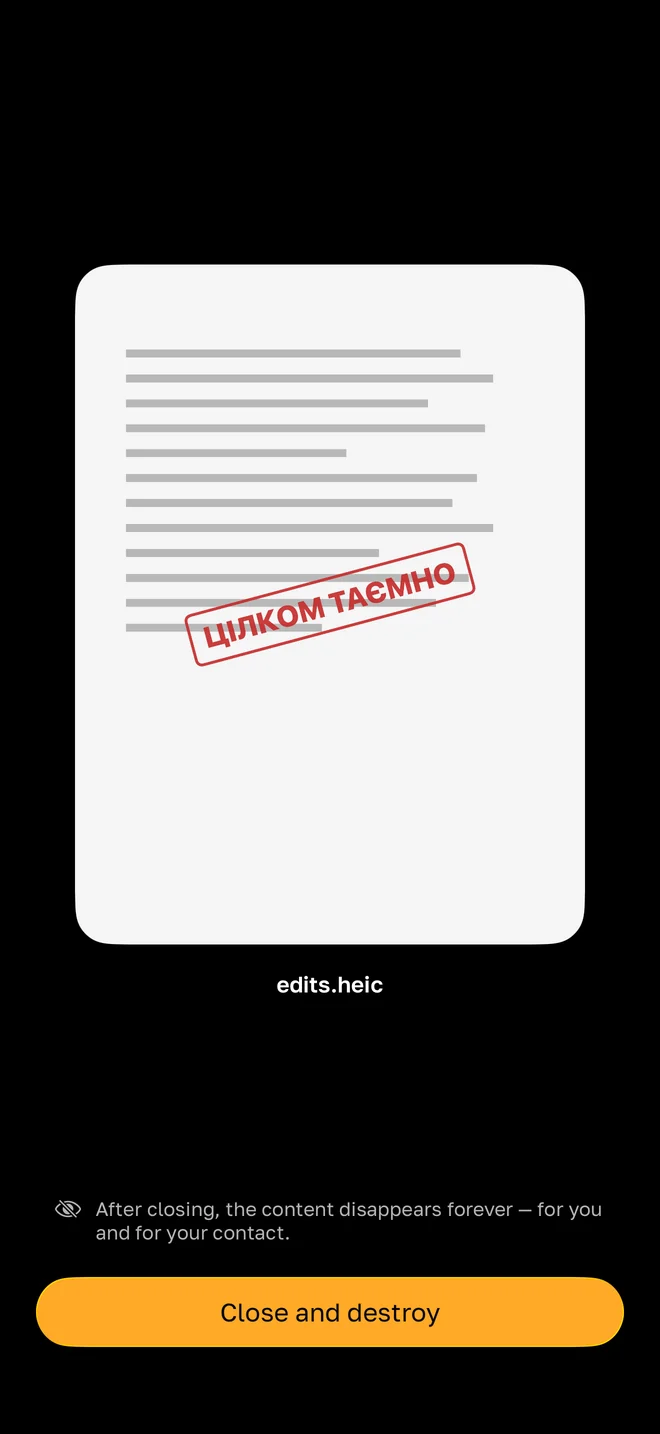
Alongside it: view-once media, silent messages, scheduled sending and delete-for-both. A screenshot is announced to both people - the one who took it and the one who was captured.

Phone safety
Encryption does not help against someone holding your phone
So, separately: a passcode with Face ID, a growing delay between attempts - and a counter that lives outside the app, so reinstalling or moving the clock does not reset it. Optionally, a wipe after five or ten failed attempts: the database, the files and the keys together.
Plus a one-tap mode that blanks all text - protection from a glance over your shoulder - blurring in the app switcher, and an incognito keyboard.
What the server knows, and what it does not →

What is not here, and will not be
Ads. Profiling. Reading your address book. Syncing your conversations into someone else's cloud. Finding people by phone number. A backup whose keys are not yours.
The screenshots on this page are from the Ukrainian build - the English interface is still being made. We would rather show what exists than mock up what does not.